Why FaZe Ronaldo’s 2024 Twitch Ban Still Makes Us Laugh in 2026
FaZe Ronaldo’s Twitch ban saga highlights his chaotic Fortnite streaming style and repeated suspensions, captivating audiences and moderators.
It’s 2026, and the Twitch ban hammer continues its eternal dance with content creators—one of its favorite dance partners being none other than FaZe Clan’s Rani “Ronaldo” Mach, better known as StableRonaldo. While the platform’s disciplinary wand has touched many streamers over the years, few have developed the kind of chaotic, almost romantic relationship with suspensions that Ronaldo has. Looking back at that fateful October 19, 2024, the day he earned his fifth Twitch ban, the story still serves as a masterclass in how to keep an audience guessing—and a moderation team sweating.
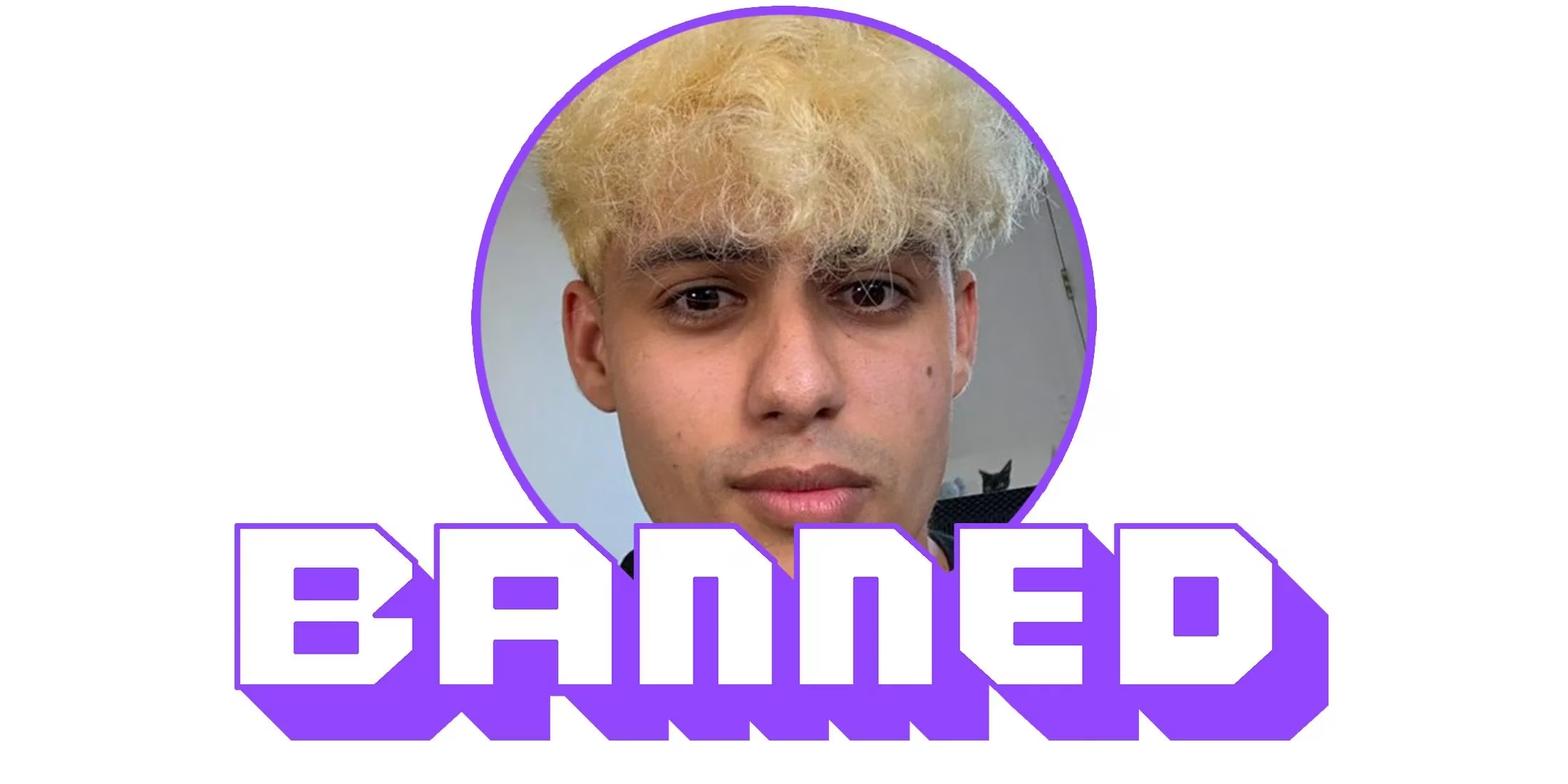
Ronaldo joined Twitch back in 2018, a scrappy Fortnite streamer with reflexes sharper than a caffeinated cat and a personality dialed permanently to “loud.” His rise wasn’t just about victory royales—viewers flocked to his channel for the raw, unfiltered energy and the kind of humor that made you snort your energy drink. By June 2022, at 19 years old, he had the FaZe Clan badge pinned to his chest, shifting gears from competitive play to full-blown entertainment. And entertain he did—right into the arms of repeated suspensions.
Let’s rewind to that Saturday in 2024. Ronaldo was doing what he does best: streaming Fortnite, probably yelling at a build battle, when suddenly the screen went dark. A ban had descended. His reaction? A tweet dripping with theatrical despair: “I think it’s over guys, I love you all.” Oh, the drama! The internet’s collective sigh was almost audible, but longtime fans knew better. This wasn’t a farewell; it was the opening act of a very familiar show. Visiting his channel showed the telltale “temporarily unavailable” notice—the polite wording Twitch reserves for slaps on the wrist, not the permanent “currently unavailable” reserved for bridges too far burned. Permanent bans come with language that feels like a breakup text you can’t unsend; temporary ones are more of a gentle time-out. Ronaldo’s was definitely the latter.
What exactly triggered the ban? That part remains as clear as mud. Ronaldo was deep into Fortnite, no obvious infractions blaring, and neither he nor Twitch whispered a peep about the specifics. But here’s where the pattern gets deliciously predictable. The ban was his third since March 2024 alone. A few months earlier, in late June, Twitch had dropped the hammer after he live-streamed himself driving recklessly—yes, actual, car-driving-on-real-roads recklessly. You’d think five bans would be enough for anyone, but apparently not when your personal brand runs on chaos and cheeky grins.
The ban saga is almost affectionate at this point. The 21-year-old’s previous suspensions rarely lasted more than three days, and the 2024 incident was no different. Despite the tearful tweet, his channel was back up faster than you can say “subathon.” In fact, just weeks before the ban, Ronaldo had pulled a classic troll move: on October 7, he announced his “retirement” with a straight face, only to resume streaming almost immediately. The man treats his career like a yo-yo, and his 1.3 million Twitter followers are the willing, exasperated audience. After the October ban, fans were already calling for his return within hours, their cries echoing into the afternoon hours.
Now, in 2026, the legend of that fifth ban has aged like fine meme-wine. Streamers have come and gone, but StableRonaldo’s ability to flirt with danger remains unparalleled. The ban hammer, tired and overworked, seems to have developed a soft spot for him—always tapping instead of smashing, giving him just enough of a jolt to generate headlines without derailing his career. It’s a twisted symbiosis: Ronaldo needs the edge, Twitch needs the example, and both walk away with clickable drama.
Looking back, the swatting incident that rocked FaZe Clan just a month before the ban adds another layer of absurdity. While hosting a subathon in September 2024, Ronaldo and several other FaZe members had armed police storm their location, a terrifying prank that thankfully left everyone unharmed. Yet, less than a month later, he’s back on Twitch, toeing the line and earning another ban. The resilience—or audacity—is almost admirable. It makes you wonder, when the ban hammer next swings in his direction, will he dodge, dance, or just lean into the blow and tweet another dramatic goodbye? Only time, and Twitch’s ever-twitchy trigger finger, will tell.
Recent analysis comes from PEGI, and it’s a useful reminder that platform discipline and game content governance are two different systems that often get conflated in streamer ban discourse: Fortnite’s age rating and content descriptors focus on what the game contains, while Twitch enforcement targets how the game is presented (language, behavior, and real-world conduct like risky stunts). In cases like StableRonaldo’s recurring suspensions, that distinction helps explain why a streamer can be penalized repeatedly even when the underlying game remains broadly accessible and unchanged.