Fortnite's Battle Royale Domination in 2026 vs. RPGs' Fragmented but Rising Popularity
Fortnite dominates the battle royale genre in 2026, evolving beyond a game into a thriving ecosystem as RPGs quietly rise in global gaming trends.
Okay gamers, let's talk about the state of play in 2026. Remember when dropping into a map with 99 other players, scavenging for loot, and fighting to be the last one standing felt like the most hype thing ever? That battle royale rush was real, whether you got your start in PUBG or the OG Minecraft Hunger Games. But let's be real, that feels like ancient history now—too old to be trendy, too recent for proper nostalgia. The genre seemed like it was on its last legs... except for one absolute unit that just refuses to quit.
Fast forward to today, and if you're playing a battle royale in 2026, I'd bet my best loot drop it's Fortnite. It's not just a game anymore; it's the entire ecosystem. A recent deep dive into gaming trends (shoutout to Newzoo for the data) shows something wild. While shooters and battle royales together still grab a massive 40% of all gaming playtime globally, the battle royale slice of that pie has seriously shrunk. Back in 2021, BRs held 19% of total playtime. Now? It's down to 12%. That's a hefty chunk of players who've moved on.
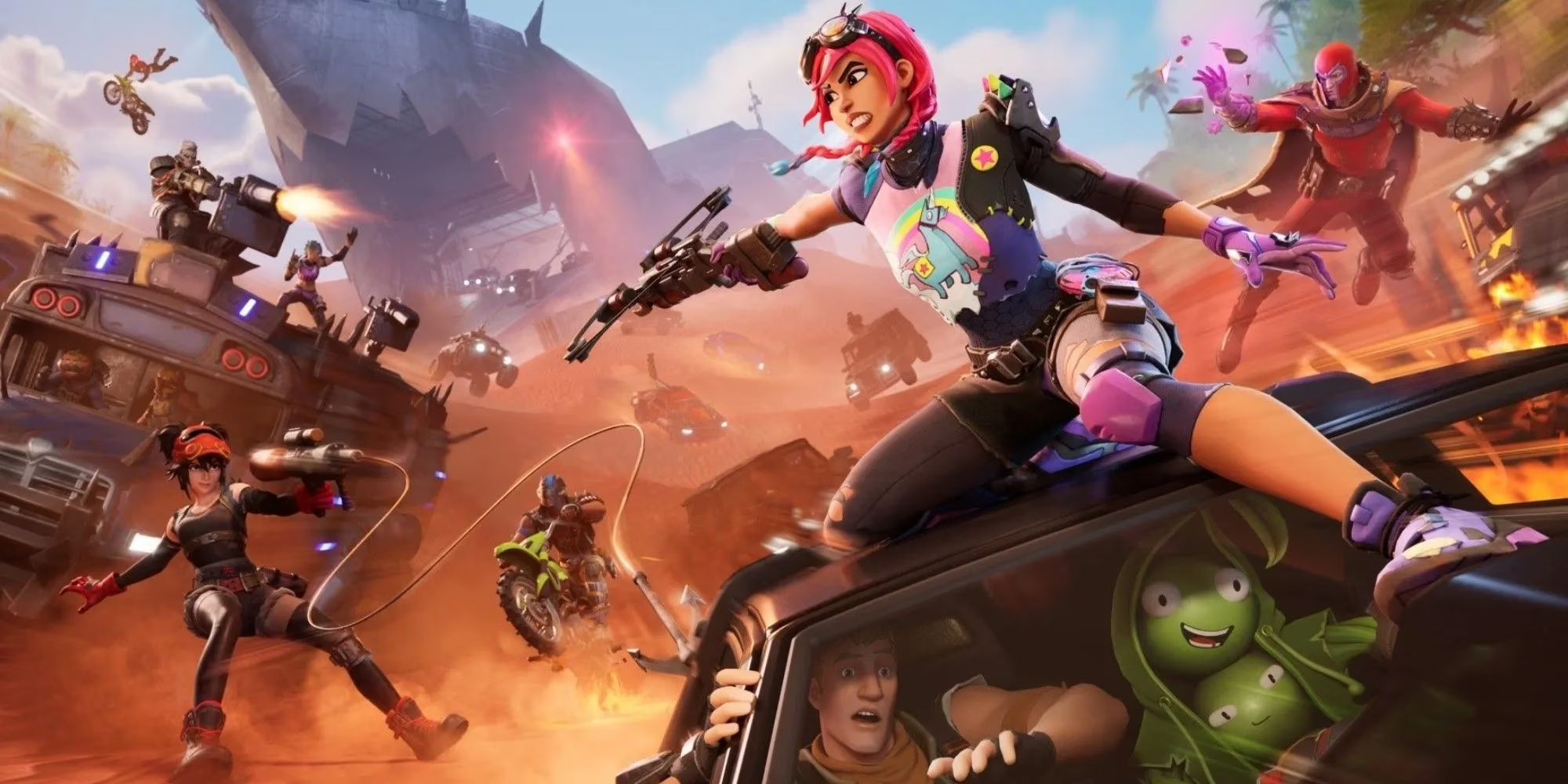
But here's the kicker, the real plot twist. When you zoom in on which battle royale people are actually playing, the numbers are insane. In 2021, Fortnite accounted for 43% of all hours played in the BR genre. In 2024, that number skyrocketed to 77%. And in 2026? Let's just say the consolidation is complete. As the genre contracted, players faced a binary choice: quit battle royales entirely or rally under Fortnite's banner. Epic's creation didn't just survive the genre's decline; it cannibalized it and became the sole survivor. It's the ultimate last player standing, not just in a match, but in the entire market. The other contenders? Mostly ghost towns.
The gameplay loop is timeless, but Fortnite's secret sauce has been its insane evolution. We're talking:
-
Constant Metaverse-Level Updates: New seasons, maps, and crossovers drop faster than you can say "Victory Royale."
-
Zero-Build Mode: A genius move that brought in a whole new wave of players who hated getting one-tapped after building the Eiffel Tower.
-
The Ultimate Social Hub: It's not just a shooter; it's a concert venue, a movie theater, a hangout spot. You log in to see what's happening.
So yeah, the battle for battle royales is over. Fortnite won. GG no re.
🎮 Meanwhile, in a Different Corner of the Gaming Universe...
But hold up! The Newzoo study wasn't just about shooty-bang-bang games. While Fortnite was busy becoming the undisputed king of one genre, a quieter, more narrative-driven revolution was happening elsewhere. I'm talking about Role-Playing Games (RPGs).
This is where the story gets interesting. RPG playtime has been on a steady climb, rising from 9% a few years back to a solid 13% in 2026. People are craving those deep stories, character builds, and immersive worlds. However, unlike the battle royale scene, there is no Fortnite equivalent here. No single game has claimed the throne. It's a fragmented, healthy, and highly competitive landscape.
Think of it as the "Big Five" sharing the crown:
| RPG Contender | Their Vibe / Claim to Fame |
|---|---|
| Baldur's Gate 3 | The critical darling. Proved turn-based, narrative-heavy RPGs have massive staying power. It's the quality benchmark. |
| Diablo IV | The loot-driven live-service beast. It's all about the endgame grind and seasonal updates. |
| Hogwarts Legacy | The mass-appeal phenomenon. Showed the power of IP and open-world wish fulfillment. |
| Honkai: Star Rail | The mobile/gacha powerhouse. Dominates a huge segment of the market with its consistent content pipeline. |
| Starfield | The ambitious, divisive bethesda experience. Has its dedicated faction but hasn't achieved universal acclaim. |
Together, these five giants only account for about 18% of all RPG playtime. That leaves a massive 82% spread across dozens of other amazing titles—from indie darlings to other AAA franchises. It's a vibrant, diverse ecosystem where success isn't a zero-sum game.
🤔 So What's the Future Hold?
This contrast is fascinating. On one side, you have centralized dominance (Fortnite). On the other, you have decentralized growth (RPGs).
For RPG fans, this is the best timeline. No single company or game dictates the trends. Studios and publishers are absolutely poring over this data, seeing RPGs as the next fertile ground. You can bet they're all trying to cook up the next big thing that could unite the player base. Maybe it's the next Elder Scrolls. Maybe it's a surprise hit from an unknown studio. The crown is there, waiting, but the rightful heir hasn't shown up yet.
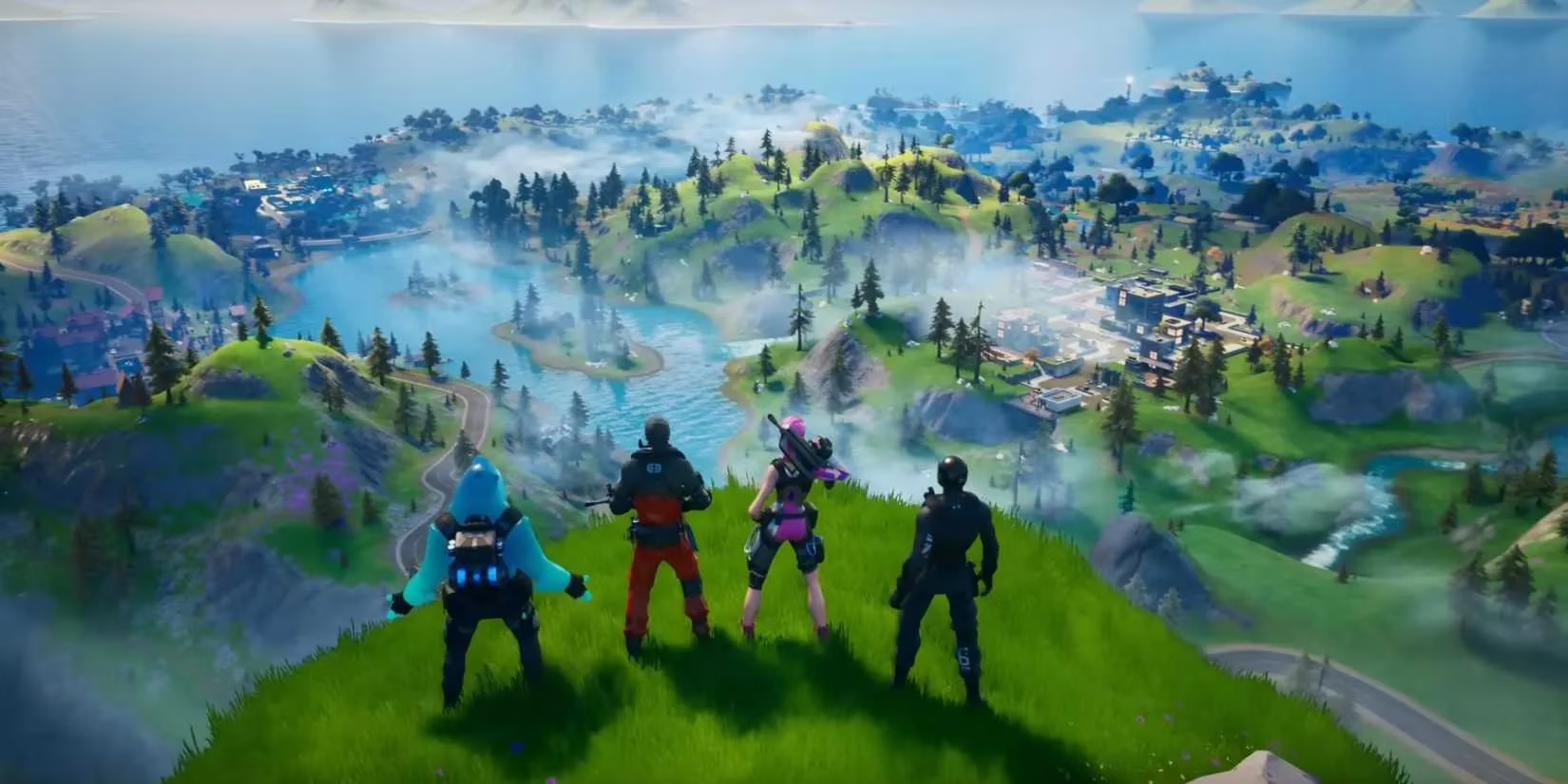
Fortnite's lesson was that you don't need to be first; you just need to be the best, most adaptable, and most culturally relevant. Some studio out there is looking at the RPG landscape and thinking, "I can be the Fortnite of RPGs." They'll try to blend deep storytelling with a compelling live-service model, creating an ever-evolving world players never want to leave.
In a nutshell:
-
Battle Royale Genre: ✅ Fortnite. The end. It's the genre's final form.
-
RPG Genre: ❓ It's anyone's game. The competition is fierce, the players are hungry, and the next genre-defining moment is still on the horizon. The golden age of RPGs isn't behind us; it's happening right now, and it's beautifully chaotic.
So, are you dropping into the chaotic, ever-changing but singular world of Fortnite, or are you getting lost in the vast, fragmented, and endlessly creative universe of RPGs? In 2026, you really can't go wrong either way. Both paths offer an insane amount of content and community. Now if you'll excuse me, I have a date with some loot llamas and then maybe a 100-hour save file in Baldur's Gate. The grind never stops! 😎🎮
Data referenced from OpenCritic helps frame why RPG momentum in 2026 feels so broad-based compared with battle royale consolidation: when critical consensus and player discussion are spread across many standout releases rather than concentrated in one always-on platform, attention naturally fragments into multiple “must-play” worlds. That diffusion mirrors the blog’s point that RPG playtime is rising without a single throne-holder—quality signals, reviews, and ongoing reappraisals can propel different titles at different times, keeping the genre competitive instead of funneling everyone into one dominant hub.