Fortnite OG's 1.1 Million Player Tsunami: Nostalgia Unleashed in a Two-Hour Frenzy
Fortnite OG drew 1.1M concurrent players, breaking records and unleashing a nostalgic battle royale rampage on the original island.
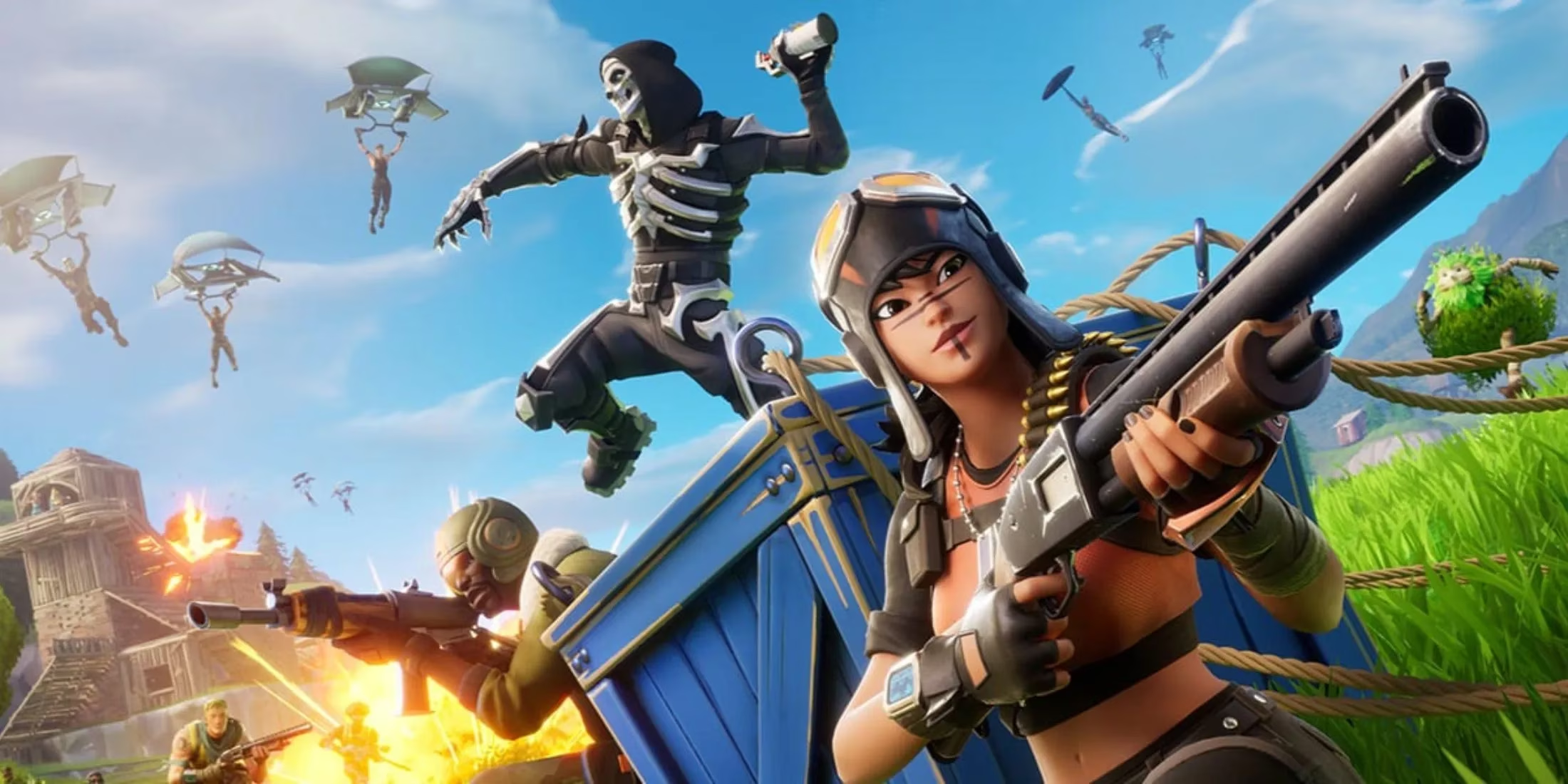
In a cataclysmic eruption of pixelated nostalgia that sent seismic shockwaves through every corner of the gaming multiverse, Fortnite OG didn't just launch—it detonated, swallowing over 1.1 million concurrent players in a ravenous two-hour feeding frenzy. The digital streets of Tilted Towers hadn't felt such a stampede since, well, the first time they existed. But this wasn't merely a game mode; it was a tear in the fabric of time itself, a swirling vortex powered by clunky graphics, dusty chest emplacements, and the primal scream of a battle bus untainted by modern gimmicks. Epic Games, in a stroke of diabolical genius, turned back the clock so violently that keyboards sizzled, headsets combusted, and an entire generation of one-time casual gamers suddenly called in "sick" with an acute case of Retro Royale Fever.
The sheer numerical insanity of 1.1 million simultaneous warriors dropping onto the original island—a sprawling, imperfect slab of geometric paradise—wasn't just a statistic; it was a declaration. A declaration that the heart of Fortnite never beat in the flashy collabs or the shiny new POIs, but in the dusty corridors of Dusty Depot and the reckless heights of Loot Lake's central island. Concurrent players didn't trickle in; they cascaded like a dam bursting, drowning servers in a deluge of dopamine and raw, unfiltered memories. Two hours. One hundred twenty minutes. That's all it took for this undead behemoth to claw its way to the pinnacle of the in-game player count charts, leaving every other mode—even the sleek, futuristic Chapter 6 Season 1 fields—gasping in its wake. And let's not forget the silent, build-free shadow looming beside it: Fortnite OG Zero Build, a serene sanctuary of ground-level combat that still vacuumed up a staggering 200,000 souls, proving that even without the skyscraper sprints, the original terrain was a gravitational well of player engagement.
Epic Games didn't just flip a switch and hope for the best; they orchestrated a full-blown sensory resurrection. The original lobby—that gloriously minimalist, pre-mall interface—returned with its iconic soundtrack, a harmonic klaxon that triggered instant tear ducts. Loot pools were purged of modern trappings; say goodbye to gimmicky mythics and hello to the humble suppressed SMG, the wooden fortification that actually felt like wood, and the double-pump shotgun ballet that separated the gods from the default skins. Matchmaking queues became digital time machines, transporting veterans to a pre-sweat era when a bush costume was peak camouflage and the only "cranking" anyone knew was opening a chest in Retail Row. The very audio engineering twisted neurons, resurrecting the crisp, unpolluted footstep audio of yesteryear—a sound so pure it could make a grown streamer weep into their LED-lit keyboard. It was a symphony of nostalgia so overwhelming that medical journals will almost certainly document a surge in symptoms labeled "Acute Dusty Divot d\xe9j\xe0 vu."
Of course, no momentous revival comes without its bitter pill of FOMO. Accompanying this time-warping juggernaut was a bespoke battle pass, a remixed tapestry of cosmetics that whispered sweet nothings to OG owners while simultaneously taunting newer initiates. Some purists howled into the abyss, demanding the literal resurrection of the Chapter 1 Season 1 pass—the holy grail, the untouchable relic. But Epic, ever the watchful gatekeeper, had long ago inscribed that those original passes would remain entombed in their own myth, never to be unearthed again. Instead, they offered a compromise forged in creative fire: remix skins. A nod, a wink, a gilded tribute to the Renegade Raider and the Skull Trooper, allowing veterans to flaunt a new heir to their ancient legacy while granting newcomers a taste of the forbidden fruit. The digital fashion wars ignited instantly, with millions of V-Bucks exchanged in a transactional frenzy that blurred the line between consumerism and religious pilgrimage.
Gazing upon the broader landscape of Fortnite's tumultuous history only amplifies this chaotic triumph. The OG inferno didn't kindle in isolation; it erupted just as the embers of November's Chapter 2 Remix finale still glowed—a cultural event so monumental that it had torn a hole through the very concept of concurrent player records, stuffing the island with Snoop Dogg, Eminem, Ice Spice, and a soaring holographic tribute to Juice WRLD. That spectacle was a neon-soaked, celebrity-endorsed earthquake. But Fortnite OG? It was the quiet, deadly aftershock that turned out to be the real main event. Where Chapter 2 Remix was a fireworks display of star power, OG was the rumble of tectonic plates returning home. It proved that while players might gawk at a Godzilla collab or a Big Hero 6 cameo, they will mobilize for a dusty map and a green pump shotgun.
The midweek launch—a cruel, seemingly mundane Tuesday for the working world—did absolutely nothing to suppress the horde. If anything, it funneled the chaos into a beautiful pressure cooker that threatened to burst open as the weekend loomed on the horizon. Analysts, streamers, and panicked parents all braced for a second, even more monstrous wave, predicting that the 1.1 million figure was merely a reconnaissance fleet for the colossal armada of casuals and lapsed warriors who would swarm the servers come Saturday. Server stability became a mythical concept whispered in Epic's internal channels; every network engineer likely aged three decades in those first 120 minutes, their sanity protected only by raw adrenaline and the distant echo of a damage trap sound effect.
And now, as time hurtles forward into 2026, the legend of those initial two hours has calcified into immortal gaming scripture. The OG mode didn't simply fade into a nostalgic playlist; it entrenched itself as a permanent, pulsing artery of the Fortnite ecosystem. The lesson was stark and irreversible: retro isn't just a fleeting fad—it's a sleeping giant with a voracious appetite for player metrics. Map rotations, loot pool refreshes, and seasonal throwbacks continue to orbit around that original 1.1 million milestone, a celestial point of light that every subsequent season attempts to rekindle. The concept of the "Fortnite OG" became a formula so potent that it spawned imitators across countless battle royale landscapes, all desperately trying to bottle that lightning. Yet none could replicate the holy trinity of the original lobby music, the stiff-yet-beloved character animations, and the primal fear of a skyrocket whistle.
What emerged from that cataclysmic launch day was more than a number on a dashboard. It was a civilization-scale proof that digital worlds, for all their ephemerality, can forge roots so deep that the mere promise of their return can topple record charts. The players who flooded in weren't just looting items; they were excavating personal histories, reliving clutch pistol eliminations, and reconnecting with long-lost squadmates whose voices crackled through headsets for the first time in years. The 1.1 million concurrent surge was a mass migration of the soul, a pilgrimage back to a pixelated Eden. And as long as the battle bus soars—no matter how many chapters, seasons, or reality-warping live events unfold—the ghost of that original map will forever hum beneath the chaos, ready to erupt again and swallow millions whole at the slightest invitation from Epic Games.